
Garlic is one of the most beloved ingredients in kitchens around the world, adding incredible flavor and depth to countless dishes. Many people also appreciate it for its potential to support heart health and overall wellness when enjoyed in moderation. Yet, like many foods, garlic can sometimes lead to digestive discomfort, such as bloating, gas, or heartburn, especially when combined with certain other items or eaten in large amounts. This is particularly true for older adults or those with sensitive stomachs.
If you’ve ever felt uneasy after a garlic-heavy meal, you’re not alone—many experience similar issues without realizing the pairings might play a role. But here’s the good news: understanding these combinations can help you enjoy garlic’s benefits more comfortably. Keep reading to discover eight common foods that might not pair well with garlic, along with practical ways to incorporate it safely into your meals.

The Benefits of Garlic: Why It’s Worth Including in Your Diet
Garlic has been used for centuries in cooking and traditional wellness practices. Research suggests it contains compounds like allicin that may support immune function and cardiovascular health when consumed as part of a balanced diet.
Studies, including reviews from sources like the National Center for Complementary and Integrative Health, indicate that moderate garlic intake might contribute to minor reductions in blood pressure and cholesterol levels for some people. It’s also a flavorful way to enhance vegetable-based meals, which are linked to better overall nutrition.
That said, garlic is high in fructans—a type of carbohydrate that can be harder to digest for certain individuals. According to experts at Monash University, fructans can ferment in the gut, leading to gas or bloating in sensitive people.
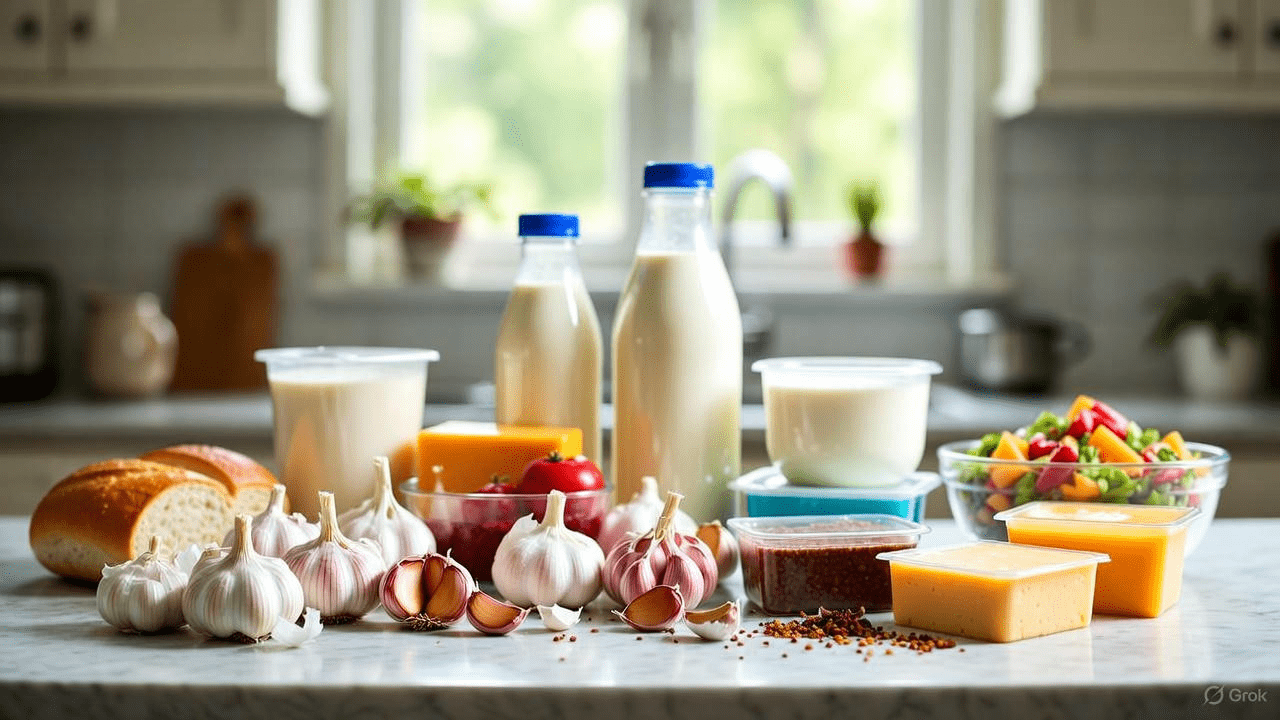
8 Food Combinations That May Cause Digestive Discomfort with Garlic
While garlic pairs beautifully with many foods, some combinations can amplify its natural effects on digestion. Here’s a closer look at eight common ones, based on insights from nutrition research and traditional dietary guidelines:
1. Dairy Products (Milk, Yogurt, or Cheese)
Garlic’s strong compounds can sometimes clash with dairy, leading to increased bloating or indigestion. In traditional systems like Ayurveda, this pairing is noted for potential gut irritation.
Research shows garlic’s fructans may ferment more noticeably when combined with lactose in dairy, especially for those with sensitivities.
2. Spicy Foods (Chili Peppers or Hot Sauces)
Both garlic and spicy ingredients can irritate the stomach lining. Together, they might heighten heartburn or acid reflux symptoms.
Studies on spicy foods indicate they relax the lower esophageal sphincter, and garlic’s pungency could add to this effect.
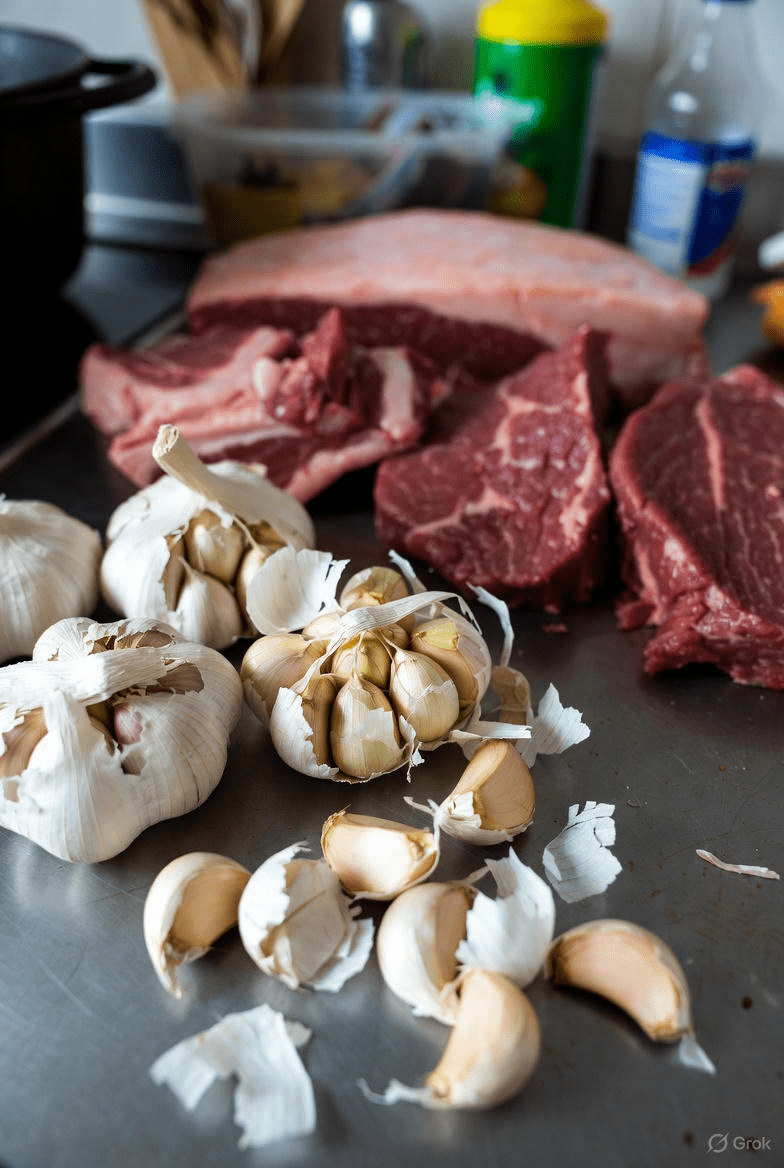
3. High-Fat Meats (Red Meat or Fried Foods)
Rich, fatty meals slow digestion, and adding garlic might prolong this, causing fullness or discomfort.
Nutrition reviews suggest that heavy proteins combined with pungent flavors like garlic can overwhelm sensitive digestive systems.
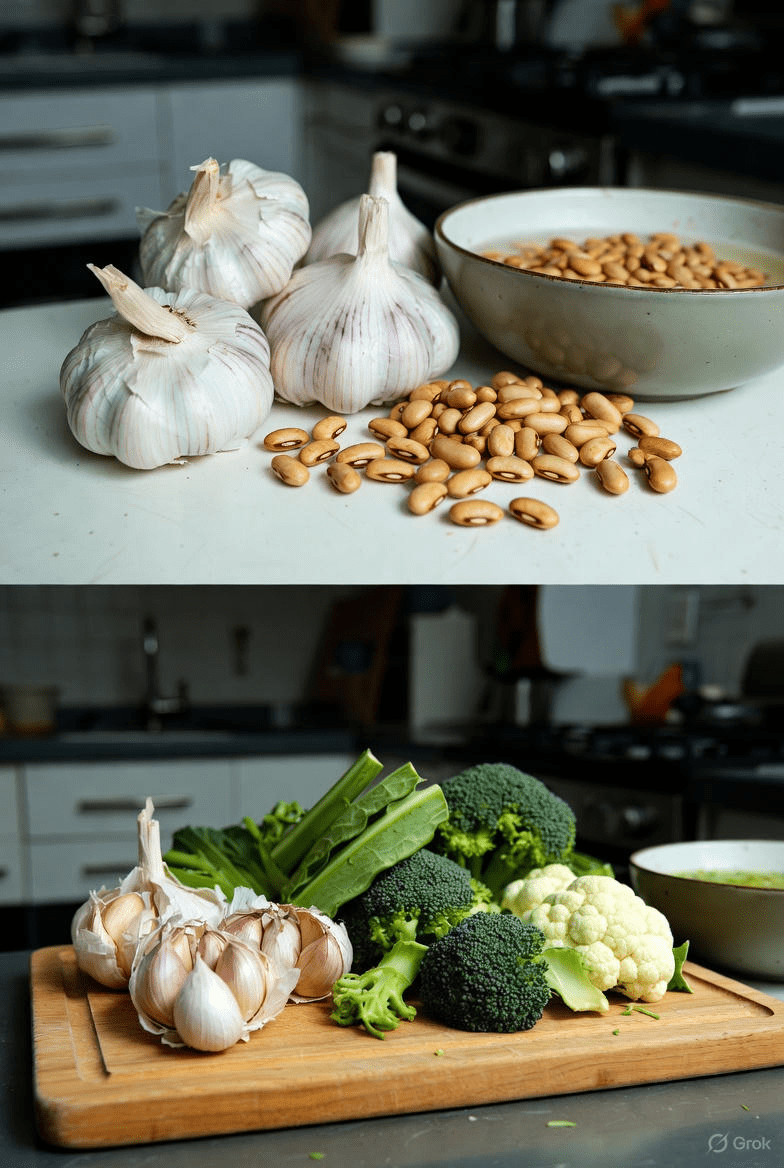
4. Beans and Legumes
Beans are naturally gas-producing due to oligosaccharides, and garlic’s fructans can compound this.
Low-FODMAP guidelines from experts highlight both as potential triggers for bloating in IBS-prone individuals.
5. Cruciferous Vegetables (Broccoli, Cabbage, or Cauliflower)
These veggies are nutritious but can cause gas on their own. Paired with garlic, the effect may intensify due to similar fermentable carbs.
Evidence from digestive health studies points to sulfur compounds in both contributing to excess gas.
6. Onions or Leeks
As fellow alliums, onions and garlic share fructans, potentially doubling the digestive load.
Monash University research classifies them as high-FODMAP foods that may lead to discomfort when eaten together in large amounts.
7. Citrus Fruits or Acidic Foods (Tomatoes, Lemons)
Acidic items can stimulate stomach acid, and garlic’s intensity might exacerbate reflux feelings.
Clinical observations note that pungent-acidic combos sometimes trigger heartburn in sensitive people.
8. Eggs
In some traditional views, garlic with eggs is seen as hard to digest, possibly due to protein-sulfur interactions leading to sluggishness.
Limited studies on food pairings suggest this combo might feel heavy for those with slower digestion.
But that’s not the full story—many of these issues stem from individual tolerance rather than universal rules.
Why These Combinations Can Be Problematic
The main culprit behind discomfort is often fructans in garlic, which aren’t fully absorbed in the small intestine for some people. They travel to the large intestine, where bacteria ferment them, producing gas.
This is more common in those following low-FODMAP approaches for managing IBS symptoms, as noted in research from trusted sources like Healthline and Cleveland Clinic.
Raw garlic tends to be more potent than cooked, so preparation matters too. Overconsumption—beyond a few cloves daily—can also amplify effects like odor or mild irritation.
Here’s a quick comparison:
| Combination | Potential Issue | Who Might Notice It Most |
|---|---|---|
| Garlic + Dairy | Bloating from fermentation | Lactose-sensitive individuals |
| Garlic + Spicy Foods | Increased heartburn | Those prone to acid reflux |
| Garlic + Fatty Meats | Slowed digestion | Older adults or low-fiber diets |
| Garlic + Beans | Excess gas | IBS or high-fiber eaters |
| Garlic + Cruciferous Veggies | Sulfur-related bloating | Sensitive stomachs |
| Garlic + Onions | Doubled fructans | FODMAP-sensitive people |
| Garlic + Acidic Foods | Reflux trigger | GERD experiencers |
| Garlic + Eggs | Heaviness | Those with slower digestion |
Actionable Tips: How to Enjoy Garlic Safely and Maximize Its Benefits
The great part? You don’t have to avoid garlic entirely. Here are practical steps to incorporate it comfortably:
- Start small: Begin with 1-2 cooked cloves per meal to gauge your tolerance.
- Cook it thoroughly: Roasting or sautéing reduces fructans and pungency compared to raw.
- Pair wisely: Combine with easy-to-digest foods like rice, leafy greens (in moderation), or olive oil-based dishes.
- Time it right: Add garlic earlier in cooking to mellow its flavor.
- Support digestion: Eat garlic with meals containing ginger or fennel, which may soothe the gut.
- Stay hydrated: Drink water to aid overall digestion.
- Listen to your body: Keep a simple food journal for a week to spot personal patterns.
For maximum enjoyment, try roasted garlic spread on whole-grain toast or added to vegetable soups—these methods often feel gentler.
In Conclusion: Balance Is Key for Enjoying Garlic
Garlic can be a delicious and supportive addition to a varied diet, offering flavor and potential wellness perks when used thoughtfully. By being mindful of pairings and portions, especially if you have a sensitive stomach, you can minimize discomfort and make the most of it.
Experiment with these tips, and you’ll likely find ways to include garlic that feel good for you.
Frequently Asked Questions
1. Is raw garlic better than cooked for health benefits?
Both forms offer value, but cooked garlic is often easier on digestion while retaining many compounds. Raw may be more potent but can cause more irritation.
2. How much garlic is safe to eat daily?
Most people tolerate 1-3 cloves per day well as part of meals. Start low if you’re new to it or have digestive sensitivities.
3. Can garlic cause allergies?
Though rare, some experience reactions like rash or breathing issues. If you suspect this, consult a healthcare professional.
Disclaimer: This article is for informational purposes only and is not intended to diagnose, treat, or prevent any health condition. Always consult your doctor or a qualified healthcare provider for personalized advice, especially if you have existing health concerns or take medications.