
Have you ever finished a meal and immediately felt bloated, tired, or strangely hungry again just an hour later? You’re not alone — most people have no idea why some foods leave them energized while others drag them down for hours. The secret lies in something called gastric emptying time, or in simple terms, how long food actually sits in your stomach before moving on. Understanding this one detail can completely change the way you plan meals, snacks, and even workouts. And by the time you finish reading, you’ll know exactly which foods to eat (and when) to feel your best all day long.
What Does “Digestion Time” Really Mean?
When we talk about how long food takes to digest, we’re mainly talking about how long it stays in the stomach before it’s broken down enough to enter the small intestine. This is called gastric emptying time.
Research published in the journal Physiology & Behavior shows that liquids and simple carbohydrates can leave the stomach in as little as 10–30 minutes, while high-fat and high-protein meals can linger for 4 hours or more. Many factors affect the speed:
- The macronutrient composition (carbs, protein, fat, fiber)
- How much you ate
- Whether the food was cooked or raw
- Your individual metabolism, age, gender, and even stress levels
The good news? Once you know the approximate timeline for common foods, you can start timing your meals like a pro.
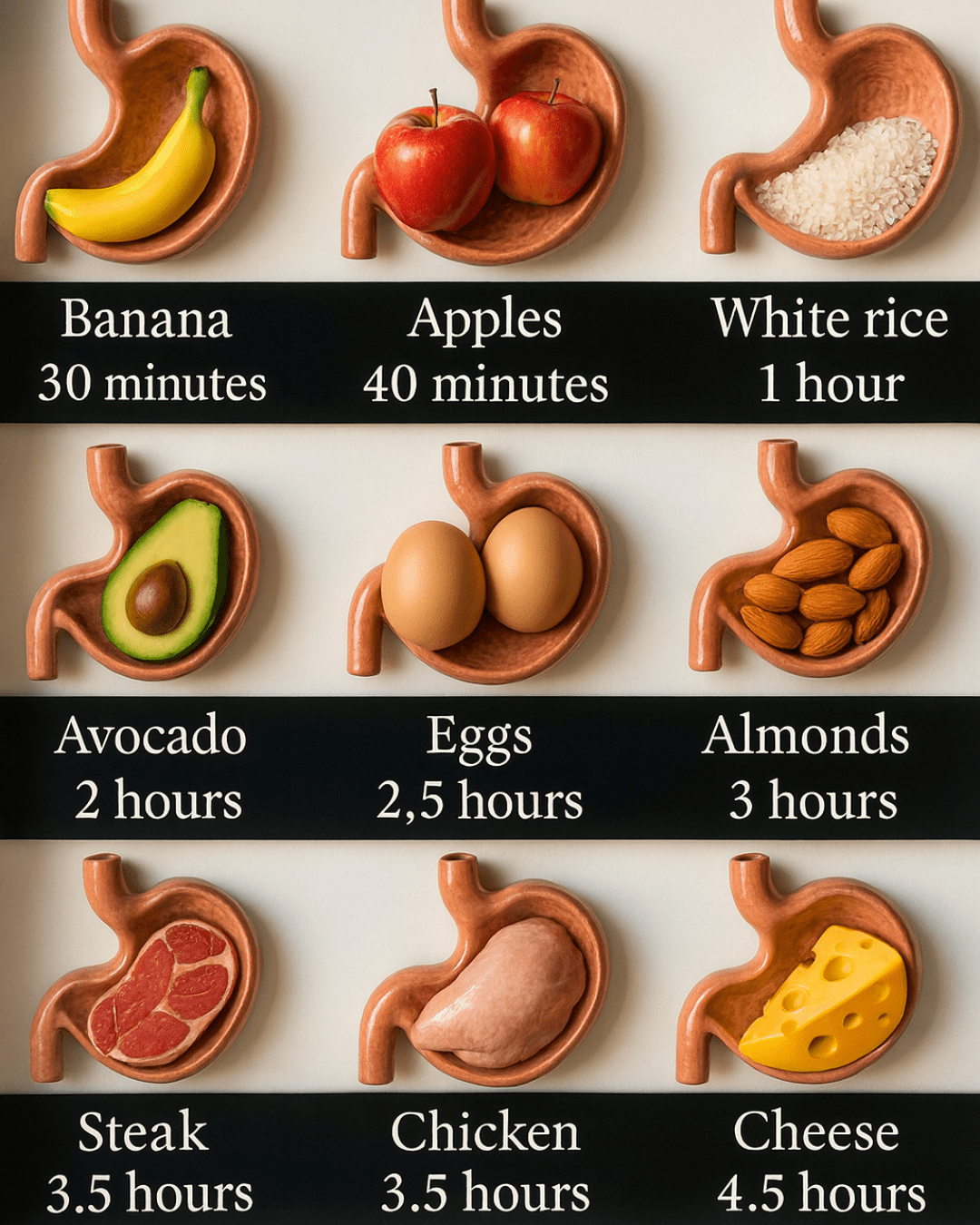
Digestion Times of 9 Popular Foods (Backed by Science)
Here’s a clear breakdown based on average gastric emptying studies and clinical nutrition data:
Fast-Digesting Foods (Under 1 Hour)
- Banana – ~30 minutes
Light, water-rich, and mostly simple sugars. Perfect pre-workout or when you need quick energy without heaviness. - Apple – ~40 minutes
High water + soluble fiber (pectin) speeds things up while still giving a gentle feeling of fullness. - White Rice – ~60 minutes
Refined carbs digest quickly and raise blood sugar fast — great post-workout, not ideal right before bed.
Medium-Digesting Foods (1.5–3 Hours)
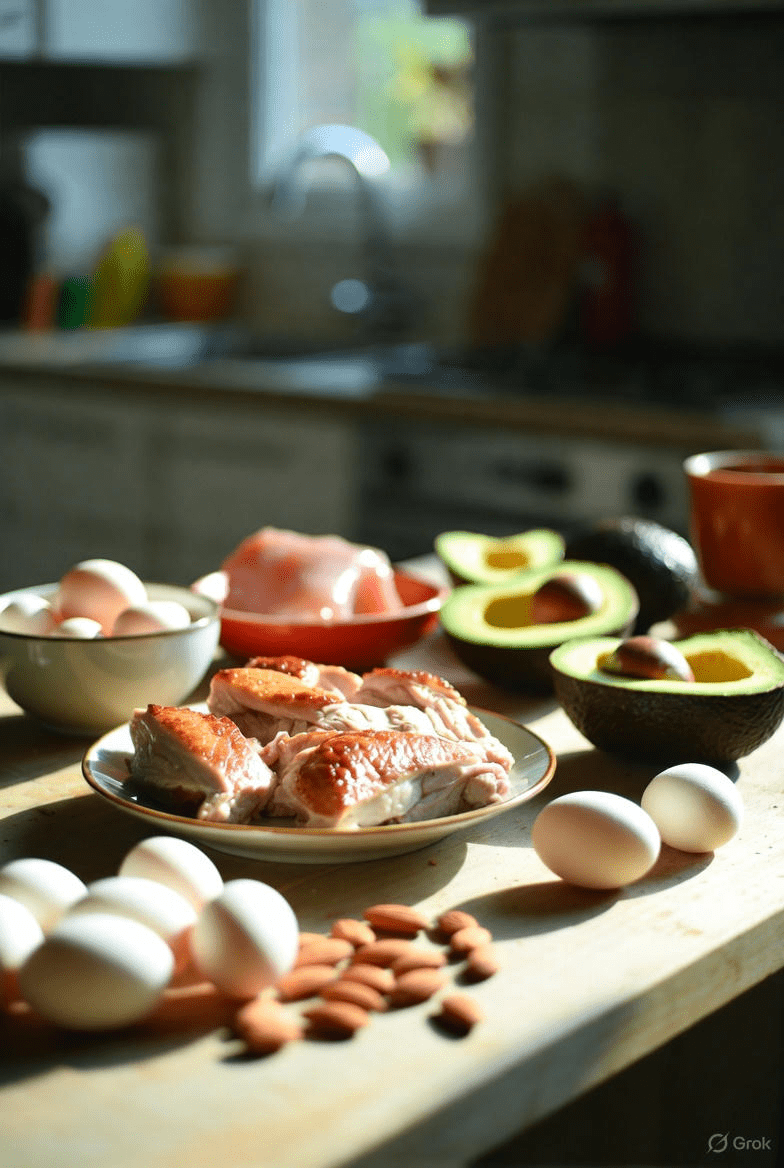
- Avocado – ~2 hours
Mostly monounsaturated fat, which slows gastric emptying but keeps you satisfied for hours. - Eggs (boiled or scrambled) – ~2.5 hours
Complete protein with a moderate amount of fat. A breakfast classic for steady energy. - Almonds (or most nuts) – ~3 hours
Fiber + fat + protein = slow and steady fuel. Great for curbing mid-afternoon cravings.
Slow-Digesting Foods (3+ Hours)
- Steak (red meat) – ~3.5 hours
High in protein and saturated fat. Save it for lunch or early dinner so your stomach isn’t working overtime at night. - Chicken breast – ~3.5 hours
Leaner than red meat but still protein-dense, so it takes time. - Cheese (hard varieties like cheddar) – ~4–4.5 hours
The combination of high fat + casein protein makes it the slowest common food on this list.
Why This Actually Matters for Your Daily Life
Timing your foods correctly can help with:
- Stable energy (no 3 p.m. crash)
- Better sleep (avoid heavy meals 3–4 hours before bed)
- Improved workouts (fast carbs 30–60 min before, protein + fat after)
- Reducing bloating and discomfort
For example, eating a banana 30 minutes before the gym gives you instant fuel. Pairing it with a handful of almonds turns that quick energy into something that lasts the whole workout.
Smart Food-Pairing Tricks You Can Use Today
The real magic happens when you combine fast and slow foods strategically:
- Pre-workout (30–60 min before): Banana or apple + a few almonds
→ Fast carbs for energy + a little fat/protein to prevent a sugar crash - Post-workout: White rice + chicken or eggs
→ Quick carbs to refill glycogen + protein for muscle repair - Evening snack (2–3 hours before bed): Greek yogurt + berries or a small piece of cheese
→ Slow digestion keeps you full overnight without disrupting sleep - When you need to stay full for hours (long meetings, travel): Avocado + eggs on whole-grain toast or chicken + cheese roll-ups
Studies from the American Journal of Clinical Nutrition show that mixed meals (carb + protein + fat) empty from the stomach more steadily than single-macronutrient meals, giving you longer-lasting energy and satisfaction.
Quick Reference Table: Digestion Speed at a Glance
| Food | Approx. Time in Stomach | Best Time to Eat |
|---|---|---|
| Banana | 30 minutes | Pre-workout, morning snack |
| Apple | 40 minutes | Anytime, especially between meals |
| White Rice | 1 hour | Post-workout, lunch |
| Avocado | 2 hours | Breakfast, lunch, snacks |
| Eggs | 2.5 hours | Breakfast, post-workout |
| Almonds | 3 hours | Mid-morning or afternoon snack |
| Steak | 3.5 hours | Lunch or early dinner |
| Chicken | 3.5 hours | Lunch, dinner |
| Hard Cheese | 4–4.5 hours | Lunch or early evening |
Your 3-Step Plan to Start Eating Smarter Today
- Look at tomorrow’s schedule and identify your busiest or most active periods.
- Choose a fast-digesting food 30–60 minutes before those times.
- Add a small portion of protein or healthy fat to make the energy last longer.
That’s it. No complicated rules — just smarter timing.
Conclusion
Your stomach doesn’t treat every food the same way, and once you respect those differences, everything from energy levels to sleep quality can improve. Start small: try swapping your usual afternoon snack for something from the “medium” or “slow” list and notice how much longer you stay full and focused.
And here’s the best part — you don’t need fancy meal plans or expensive supplements. Just the simple knowledge you now have about digestion times is enough to make a real difference.
FAQ
Q: Does drinking water with meals speed up or slow down digestion?
A: A moderate amount of water (about 8–12 oz) actually helps digestion. Very large amounts can temporarily slow gastric emptying.
Q: Why do I feel sleepy after eating rice or pasta?
A: Fast-digesting refined carbs cause a quick rise and fall in blood sugar, especially when eaten alone. Pairing them with protein, fat, or fiber prevents the crash.
Q: Is it bad to eat slow-digesting foods at night?
A: Not necessarily, but very heavy meals (steak, cheese) within 2–3 hours of bedtime can interfere with sleep quality for some people. Lighter slow options like cottage cheese + berries are usually fine.
Disclaimer: This article is for informational purposes only and is not a substitute for professional medical advice. Always consult your doctor or a registered dietitian for personalized nutrition recommendations.
A