Toothpaste and Lemon for Dark Circles: Does It Really Work? (Dermatologist-Backed Truth)

Dark circles under the eyes can make you look tired, older, and less refreshed, even after a full night’s sleep. Many people search for quick, natural fixes using everyday items found in the kitchen or bathroom. Social media trends often show dramatic before-and-after photos with toothpaste mixed with lemon applied under the eyes, promising brighter, smoother skin in no time. But before you reach for that tube of Colgate and a fresh lemon, it’s worth understanding what science and skin experts actually say about this popular DIY approach — and why it might not be the solution you’re hoping for.
In this article, we’ll explore the truth behind this remedy, break down why it gains so much attention online, and share safer, more effective ways to care for the delicate skin around your eyes.
Why Do Dark Circles Appear Under Your Eyes?
The skin under your eyes is extremely thin — about half the thickness of the rest of your face. This makes blood vessels, shadows, and pigmentation more visible.
Common causes include:
- Lack of sleep or fatigue — leading to dull, sunken-looking skin
- Genetics — some people inherit thinner skin or more prominent vessels
- Aging — loss of collagen makes the area appear darker
- Dehydration and allergies — which can cause puffiness and shadowing
- Lifestyle factors — like sun exposure, smoking, or high-salt diets
These factors create a perfect storm for noticeable dark circles. That’s why simple home remedies feel so appealing — they’re cheap, accessible, and promise fast results.
The Buzz Around Toothpaste and Lemon: What the Trend Claims
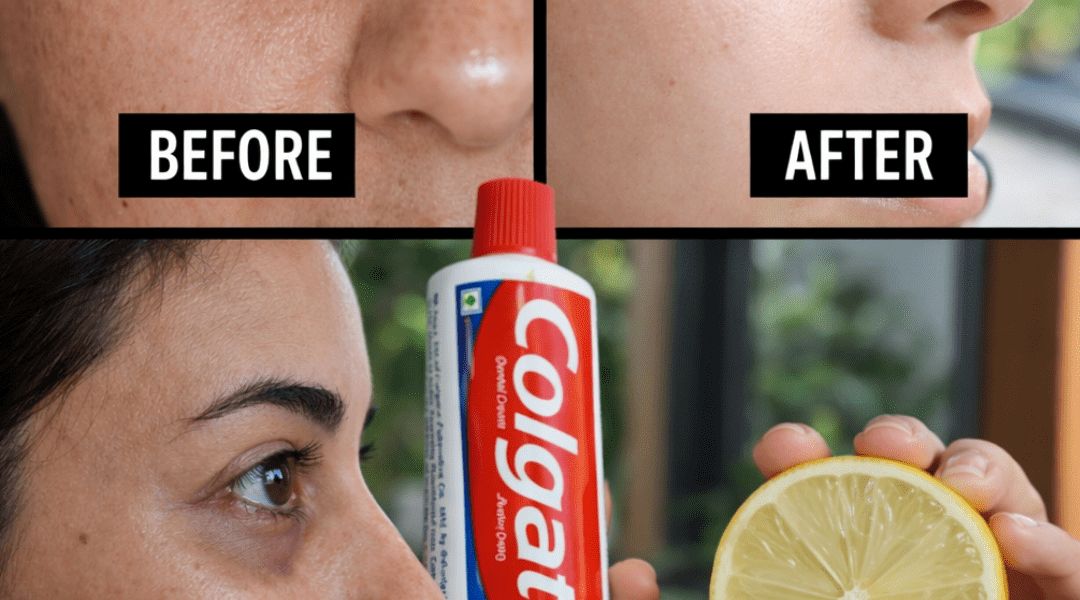
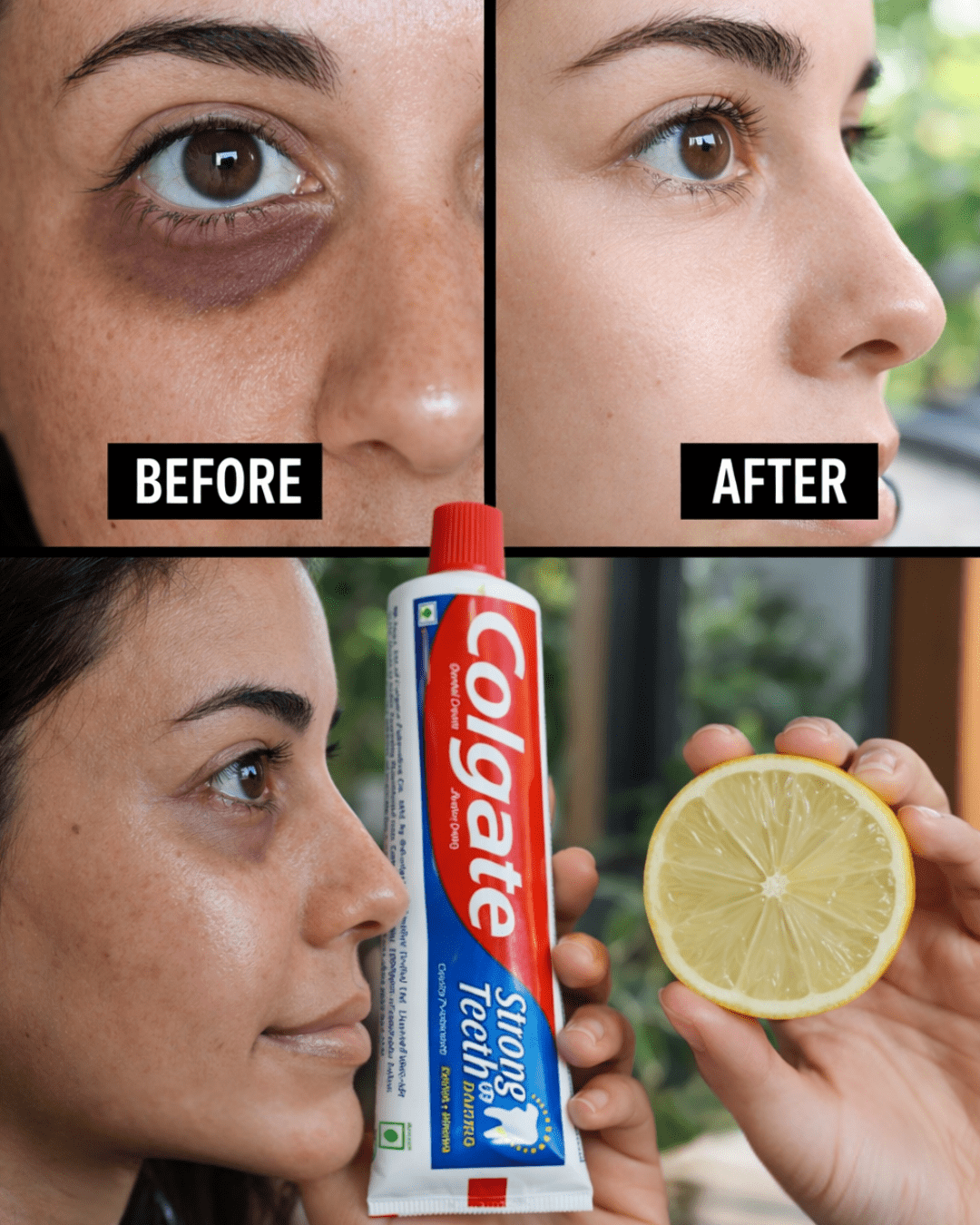
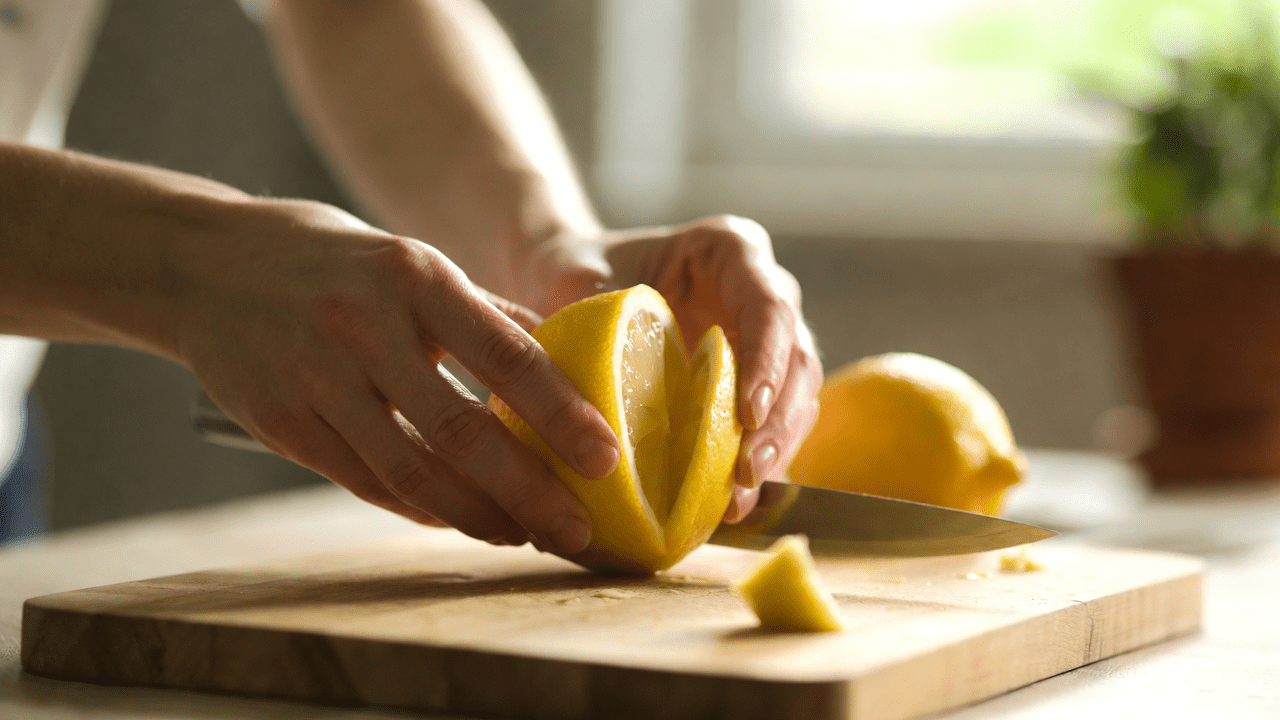
You’ve probably seen those viral images: a person with prominent under-eye darkness applies a paste of toothpaste (often Colgate) and fresh lemon juice, waits a few minutes, then reveals dramatically lighter skin.
The logic behind the trend goes like this:
- Lemon is rich in vitamin C and citric acid, which some believe can brighten skin tone.
- Toothpaste contains ingredients like menthol or mild abrasives that might temporarily tighten or soothe the area.
But here’s the part that’s often missing from those eye-catching posts…
The Dermatologist-Backed Truth: Does It Actually Work?
Short answer: No strong scientific evidence supports using toothpaste and lemon together to improve the appearance of dark circles.
Dermatologists and skin health experts consistently warn against this combination, especially around the sensitive eye area. Here’s why:
- Lemon’s high acidity (pH around 2) can irritate thin skin, strip natural oils, cause redness, dryness, or even chemical burns. When exposed to sunlight afterward, it raises the risk of phytophotodermatitis — a reaction that leads to dark patches or burns.
- Toothpaste is formulated for teeth, not facial skin. It contains detergents (like SLS), abrasives, and flavors that can disrupt the skin barrier, leading to irritation, inflammation, or worsening dryness.
Multiple fact-checks and dermatologist opinions label this as a myth with no solid backing. While lemon provides vitamin C (which can brighten when used in gentle, formulated products), applying it raw — especially mixed with toothpaste — does more harm than good. Studies and expert reviews show no reliable proof that this duo fades dark circles long-term.
But that doesn’t mean you’re out of options…
Safer Ways to Address Dark Circles Naturally
Focus on gentle, evidence-informed habits that support skin health without the risks.
Here are some dermatologist-recommended approaches:
- Get enough sleep — Aim for 7-9 hours to reduce puffiness and dullness.
- Stay hydrated — Drink plenty of water and use a good eye moisturizer.
- Cool compresses — Place chilled cucumber slices, cold spoons, or caffeinated tea bags (green or black) over closed eyes for 10-15 minutes to constrict blood vessels and reduce shadowing.
- Gentle massage — Use your ring finger to lightly tap a hydrating eye cream upward to improve circulation.
- Sun protection — Wear SPF around the eyes daily, as UV exposure worsens pigmentation.
Quick Comparison: Popular Remedies vs. Safer Alternatives
- Toothpaste + Lemon → High irritation risk, no proven benefits
- Cold tea bags → Low risk, helps with puffiness and temporary brightening
- Cucumber slices → Soothing, hydrating, zero acidity concerns
- Formulated vitamin C eye serum → Gentle, targeted brightening (patch test first)
These options are kinder to your skin and more likely to provide noticeable, lasting improvements when used consistently.
Actionable Tips: A Gentle Morning and Night Routine for Brighter-Looking Eyes
Want to start today? Try this simple, safe routine:
- Cleanse gently — Use a mild, fragrance-free cleanser around the eyes.
- Apply a cool compress — For 5-10 minutes in the morning to wake up the area.
- Hydrate — Pat on an eye cream with hyaluronic acid or peptides (look for ones labeled for sensitive skin).
- Protect — Finish with a broad-spectrum SPF 30+ (use a mineral-based one to avoid stinging).
- At night — Repeat hydration and consider a cream with gentle ingredients like caffeine or niacinamide.
Consistency matters more than quick fixes — give it 4-6 weeks to see subtle changes.
Conclusion: Focus on Skin Health, Not Viral Hacks
While the toothpaste-and-lemon trend looks tempting in photos, the reality is far less glamorous. The delicate skin around your eyes deserves care that’s gentle and backed by science, not risky experiments.
Prioritize sleep, hydration, sun protection, and proven soothing methods for the best chance at a brighter, more refreshed look.
FAQ
1. Is lemon juice ever safe for skin around the eyes? Lemon can provide vitamin C benefits in low concentrations through formulated skincare products, but direct application (especially undiluted) is not recommended due to irritation risks.
2. Can toothpaste help with any skin concerns? Toothpaste is designed for oral use only. Applying it to facial skin can cause dryness or irritation — it’s best left for brushing teeth.
3. How long does it take to see improvement in dark circles? Results vary by cause, but consistent lifestyle changes and gentle care often show subtle improvements in 4-8 weeks.
Disclaimer: This article is for informational purposes only and not a substitute for professional medical advice. Always consult a dermatologist or healthcare provider before trying new skincare routines, especially if you have sensitive skin or existing conditions. Patch test any new product and stop if irritation occurs.